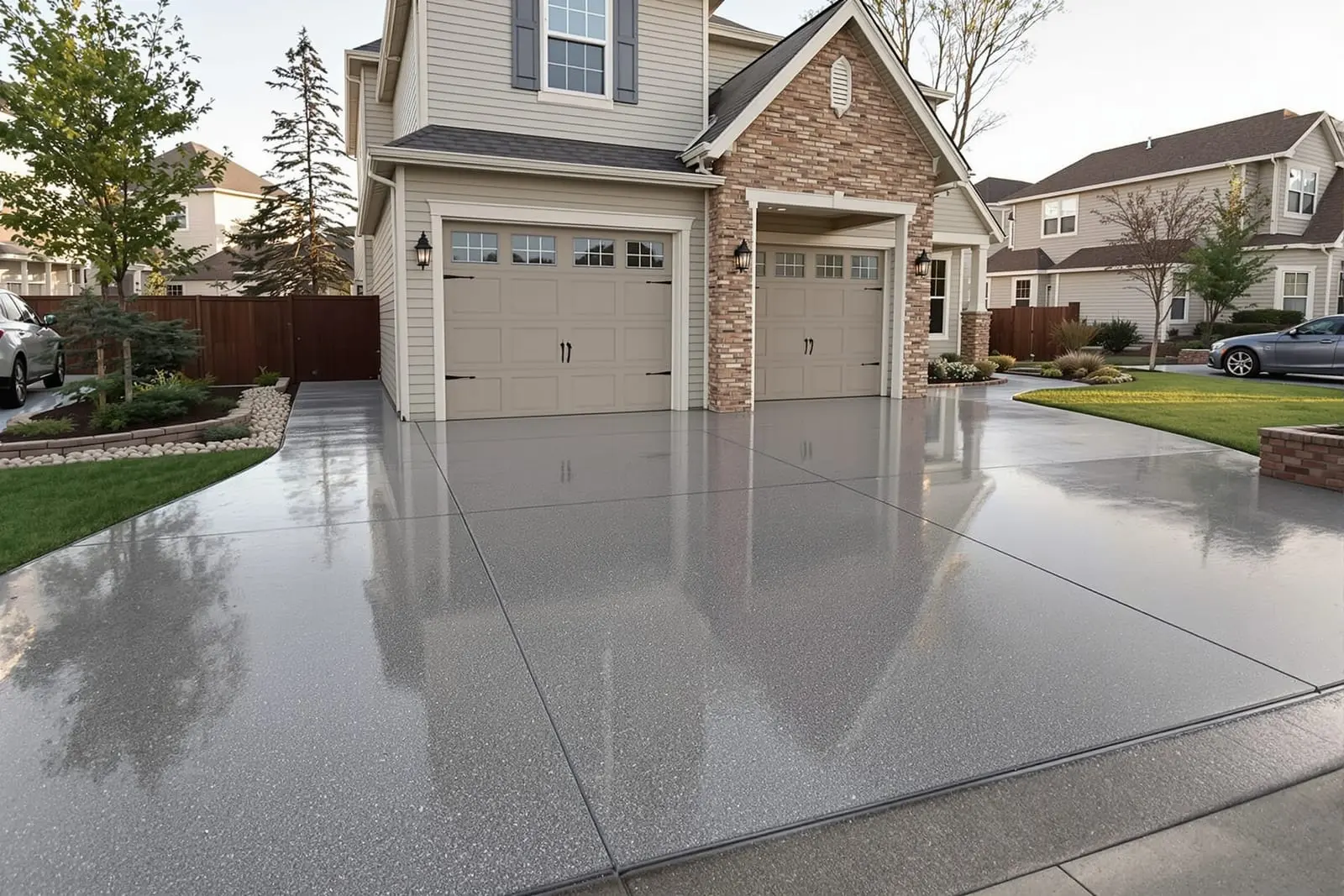
Get durable concrete garage floors in Baton Rouge, LA that stand up to vehicles, tools, and storage. We pour new slabs and repair or replace failing floors in garages and basements. Proper reinforcement, thickness, and finishing help prevent cracking and dusting. Contact us for a quote on strong, level concrete flooring.
Vanguard Concrete Baton Rouge provides professional concrete garage floor throughout Baton Rouge, LA and the surrounding area. Our licensed, insured crew delivers safe, clean, on-time work with a free estimate before anything begins. Call (225) 416-8588 or request your free quote.
Durable Concrete Garage Floors for Baton Rouge Homes
A concrete garage floor in Baton Rouge has to handle more than parked cars. Heat, humidity, blown-in rain, and occasional flooding can all shorten the life of a poorly built slab. Vanguard Concrete Baton Rouge focuses on garage and basement floors that are engineered for these local conditions, with the right thickness, reinforcement, and finish for real-world use.
Your garage floor is typically the hardest-worked concrete surface on your property. It supports vehicle weight, hot tires, tool chests, lawn equipment, and chemical spills. A good slab will stay flat and crack-resistant, shed water instead of holding puddles, and provide a finish that is easy to clean and safe to walk on even when damp.
Basements in the Baton Rouge area are less common than in other parts of the country, but when they exist they tend to have moisture challenges because of our high water table and heavy rains. For basement concrete floors, we pay close attention to vapor control and drainage so that you do not fight musty odors, peeling coatings, or damp spots coming through the slab.
At Vanguard Concrete Baton Rouge, we start each garage or basement floor project with a site visit. We look at existing drainage around the structure, how water currently flows during storms, and whether the existing base is stable. From there we recommend a floor design that matches how you plan to use the space, whether that is basic vehicle storage, a workshop, a home gym, or conditioned living space over a basement.
Our Installation Process for Garage & Basement Concrete Floors
Every concrete garage floor and basement slab we install in Baton Rouge follows a clear, step-by-step process. This avoids surprises and helps the floor perform well for decades rather than a few years.
First, we evaluate and prepare the subgrade. For new construction, we check that the builder’s pad is compacted properly and not soft or spongy. For replacement work, we break and remove the old concrete, inspect the soil underneath, and correct any problem areas with compaction and road base. This base layer is crucial in our local clay soils, which expand and contract with moisture.
Next, we set forms and establish elevation. In a garage, the slab is usually pitched slightly toward the overhead door or floor drain so that rainwater and car wash water can escape instead of running toward the interior door. For a basement, slopes are kept minimal for comfort, but we still plan for any required drains or sump pits.
We then install reinforcement. Most garage and basement floors we pour use either welded wire mesh or rebar tied in a grid pattern. In areas where heavy equipment or multiple vehicles will be parked, we may upgrade to thicker slabs with closer bar spacing. Control joints are planned at this stage too, so that expected shrinkage cracks form along straight, intentional lines instead of randomly across the floor.
Before pouring, we add a vapor barrier for basements and for garages that will be climate controlled or receive epoxy coatings. A quality plastic membrane beneath the slab reduces moisture migration, which is important in our humid Baton Rouge climate.
Finally, we place and finish the concrete. We use concrete mixes rated for the expected load and exposure, usually with a minimum 3000 to 4000 psi strength and proper air content. The surface is screeded, bull floated, and finished according to your chosen texture, then cured carefully so it gains strength evenly without excessive shrinkage or surface dusting.
Finish and Design Options for Your Concrete Garage Floor
Vanguard Concrete Baton Rouge offers several finish options for concrete garage floors and basement floors, each suited to different uses and budgets.
For a straightforward, practical garage floor, a smooth trowel finish with a light broom texture is common. This gives a surface that is easy to sweep yet still provides traction under wet tires. We pay careful attention to joint layout so that saw-cut lines look intentional, not random.
If you want your garage to double as a hobby space or showroom, we can prepare the concrete for a decorative coating. Most homeowners choose to let the slab cure properly, then apply an epoxy or polyaspartic coating system. We can finish the concrete with a profile that allows coatings to bond tightly, and we can discuss color flakes, solid colors, or clear sealers that highlight the natural concrete.
For basements that will be used as living space or a home gym, stained and sealed concrete is a popular choice. We can apply integral color in the mix, acid stains, or water-based stains after curing to achieve a variety of tones. A satin or matte sealer adds protection from spills while keeping the floor comfortable underfoot.
Edge details matter too. In many garages we slightly round the front lip at the door to reduce chipping when vehicles cross the threshold. At interior doorways, we make sure floor heights align cleanly with adjoining rooms so you do not end up with awkward transitions.
If you have heavy woodworking or metalworking equipment, we can adjust finish texture so the surface has just enough grip to keep machines stable but is still easy to move dollies and tool carts.
How Baton Rouge Climate Affects Garage & Basement Floors
Our warm, humid Baton Rouge climate and frequent thunderstorms create specific challenges for concrete garage and basement floors. Vanguard Concrete Baton Rouge designs each project with these local conditions in mind.
Temperature swings and direct sun on garage slabs can cause early surface drying if the pour is not managed properly. We schedule many pours in the morning, use proper curing methods, and protect the slab from rapid moisture loss. This helps prevent surface cracking, dusting, and weak top layers.
Moisture is another key issue. With high humidity and a high water table in many neighborhoods, water vapor often rises through the soil and into the slab. If you plan to finish a basement or apply a non-breathable coating on a garage floor, we take steps like vapor barriers, proper drainage outside the foundation, and sometimes moisture testing before coatings are applied.
Our clay-heavy soils can expand when wet and contract when dry. Over time this movement can cause slabs that were poured too thin or without a stable base to settle or crack. We counter this with proper subgrade compaction, base rock where needed, and appropriate reinforcement tied into the design.
Flooding and wind-driven rain also influence design choices. In low-lying areas, we may recommend slightly higher thresholds at the garage door, careful slope toward the exterior, and sealers or coatings that are easier to clean if water does get in. For basements, tying the slab design into sump pumps or french drains is often a wise investment to manage water intrusion over the long term.
Because of all these factors, we encourage Baton Rouge homeowners to treat their garage and basement floor as an engineered system, not just a flat pour. Proper planning at the beginning prevents moisture problems, buckling finishes, and costly repairs later.
What Affects the Cost of a Concrete Garage Floor
Homeowners often ask why concrete garage floor prices can vary so much in Baton Rouge. Vanguard Concrete Baton Rouge is transparent about what drives cost so you can make informed decisions.
Slab thickness is a major factor. A basic residential garage might use a 4 inch slab, but if you plan to park heavy trucks, store a boat, or operate a commercial-weight lift, you may need thicker concrete and upgraded reinforcement. More concrete and steel directly increase material and labor costs, but they also reduce the risk of expensive failure later.
Site conditions also play a big role. If we are replacing a failed floor, costs can include demo and haul-off of the old concrete, correction of poor base preparation, and sometimes drainage improvements around the garage or basement walls. Soft or uneven subgrade requires more work to stabilize than firm, well-compacted soil.
Access affects pricing too. A straightforward front driveway pour where a concrete truck can reach the forms is more economical than a tight backyard basement slab that requires pumping concrete over the house. Pumping and extra crew time increase overall cost.
Finish and protection choices change the price as well. A basic broom finish garage floor will cost less than a slab that is specified with precise flatness tolerances for equipment or is prepared specifically for a decorative coating system. Stains, sealers, and epoxy or polyaspartic coatings are usually quoted separately or as an upgrade.
Finally, timing matters. Pouring during cooler parts of the day and allowing adequate curing before heavy use keeps your floor stable, but it may lengthen the schedule. Rushing a project so vehicles are placed on the slab too early can lead to tire marks and microcracking, which can create future expenses if you plan on applying a coating.
Working With Vanguard Concrete Baton Rouge
Choosing who installs your concrete garage floor or basement slab is just as important as choosing the right materials. Vanguard Concrete Baton Rouge focuses on clear communication, detailed planning, and careful workmanship so you know what to expect at each step.
We begin with an on-site consultation where we measure, inspect drainage and soil conditions, and ask how you plan to use the space. Based on that, we outline a recommended slab thickness, reinforcement type, finish options, and any moisture protection steps needed. You will receive a written proposal that breaks down what is included, so you are not surprised by add-ons later.
Scheduling is coordinated around weather as much as possible. For garage floors, we usually recommend staying off the new slab with vehicles for at least a week, sometimes longer for heavy loads or before applying coatings. We explain these timelines in advance so you can plan where to park and store belongings while work is underway.
During the project, our crew protects adjacent areas, manages concrete washout properly, and keeps the site as organized as possible. We cut control joints at the right time after the pour to guide natural cracking, and we return if needed to apply sealers or assist your coating contractor with surface prep.
Once your new concrete garage or basement floor is in place, we provide care guidelines tailored to your finish. This typically covers when to wash the slab, what cleaners to avoid, when to reseal, and how to spot warning signs of drainage or moisture issues. Our goal is a floor that not only looks good when we leave but continues to perform well through many Baton Rouge summers and storms.
“
Professional garage & basement concrete floors, done right the first time, quality materials, honest pricing, and results that last.
Vanguard Concrete Baton Rouge
Garage & Basement Concrete Floors Across Our Service Area