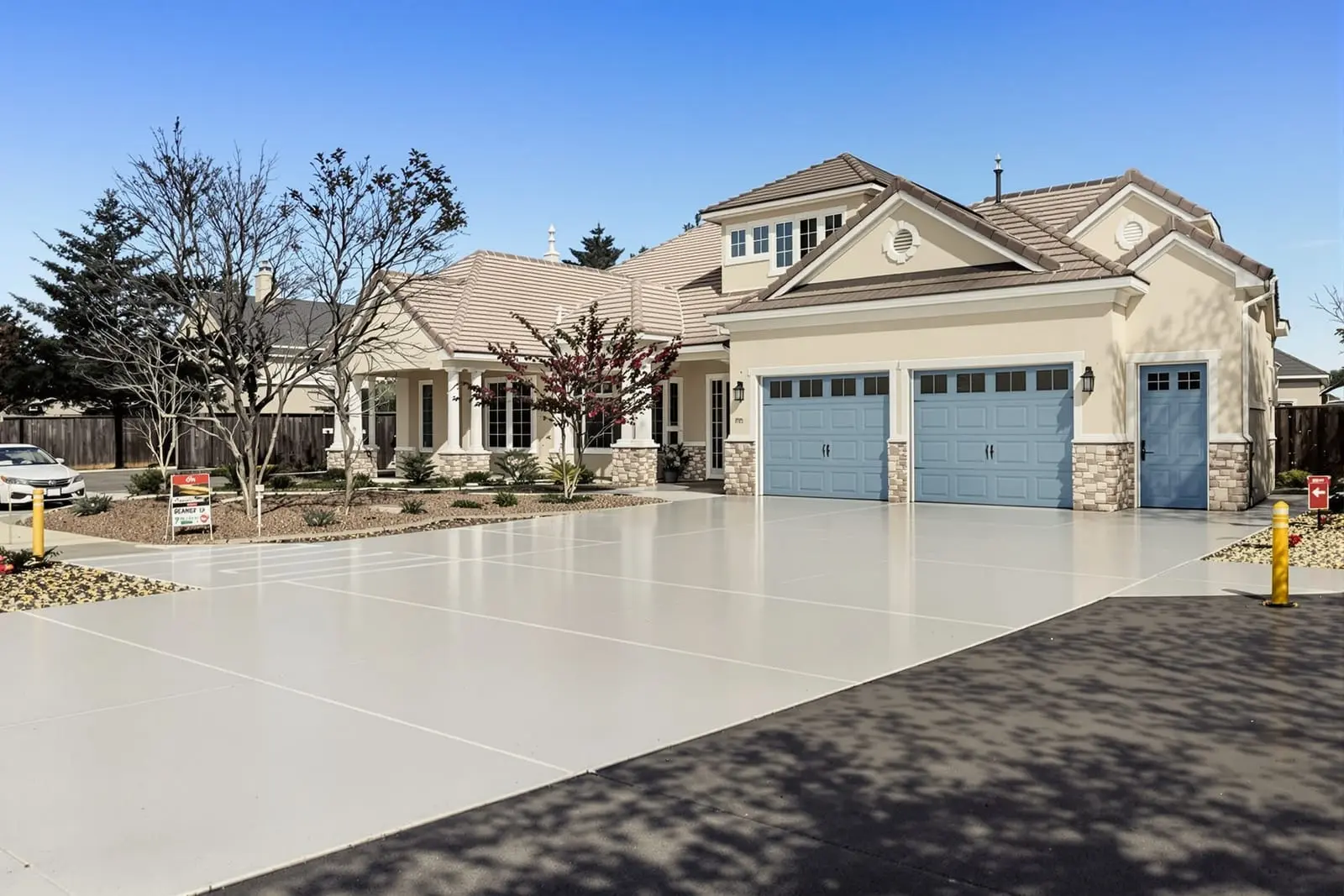
Support your business operations with reliable commercial concrete paving in Baton Rouge, LA. We install heavy duty slabs for entrances, drive lanes, dumpster pads, and more. Our crews coordinate with your schedule to minimize downtime. Get a clean, professional look and long lasting performance for your commercial property.
Vanguard Concrete Baton Rouge provides professional commercial concrete paving throughout Baton Rouge, LA and the surrounding area. Our licensed, insured crew delivers safe, clean, on-time work with a free estimate before anything begins. Call (225) 416-8588 or request your free quote.
Commercial Concrete Paving for Baton Rouge Businesses
Commercial concrete paving is different from pouring a small residential slab. Traffic loads are heavier, schedules are tighter, and mistakes get expensive. Vanguard Concrete Baton Rouge focuses on commercial work in our local conditions, so we design and build pavement that stands up to delivery trucks, heavy equipment, and Baton Rouge heat and rain.
When you contact us, we start with how your site is actually used. We look at turning paths for delivery trucks, dumpster access, drive-thru lanes, loading zones, forklift routes, and where water currently collects. For existing pavement, we walk the site with you, note cracks, rutting, soft spots, and drainage problems, then core or probe the base if needed. For new construction, we review plans, soil reports if they exist, and coordinate with your GC or site contractor.
From there we recommend pavement thickness, reinforcement, and joint layout based on use, not just a default spec. For example, light car traffic may work with 4 to 5 inches of concrete on a strong base, while truck lanes and dumpster pads usually require 6 to 8 inches or more with added reinforcement. Our goal is to give you a slab that will last through years of Louisiana weather and repeated loading without constant patching.
How Our Commercial Concrete Paving Process Works
Commercial concrete paving with Vanguard Concrete Baton Rouge follows a clear, step by step process so your operation is disrupted as little as possible.
1. Site evaluation and layout. We verify boundaries, finish elevations, and drainage paths. We set string lines or laser levels so your pavement will drain to inlets, swales, or street gutters instead of back toward your building.
2. Demolition and subgrade prep. For replacements, we sawcut existing pavement into manageable sections so that adjacent slabs and utilities stay protected, then remove and haul off old concrete or asphalt. We proof-roll the subgrade using a loaded truck or compaction equipment to identify soft spots, then undercut and replace weak soil with compacted aggregate where needed.
3. Base installation. A compacted base layer of limestone or crushed concrete is placed and graded to proper slope, then compacted with a plate compactor or roller to meet density requirements. A stable, well compacted base is what prevents future settling and random cracking.
4. Forms, reinforcement, and joints. We set wood or steel forms, check elevations, and install dowels, rebar, or welded wire mesh where specified. We lay out control joints to match traffic patterns and slab sizes, and we plan where to use load transfer dowels at joints that will see heavy truck traffic.
5. Concrete placement and finishing. We typically use a 4,000 psi mix or higher for commercial concrete paving, often with low water to cement ratios and admixtures for workability and durability. Concrete arrives from a Baton Rouge plant, is placed by chute or pump, then screeded, bull floated, edged, and broom finished for slip resistance. In drive-thru lanes or slopes, we may use a heavier broom or tined finish for better traction.
6. Curing and cutting joints. We apply curing compound or use wet curing methods to control moisture loss, which reduces shrinkage cracking. Control joints are sawcut to the correct depth, usually within 6 to 24 hours depending on temperature and mix, to guide cracking into straight, planned lines.
7. Clean up and reopening. We remove forms, backfill edges, and sweep the area. In many cases, light foot traffic is allowed within a day, vehicle traffic in 5 to 7 days, and heavy trucks in 7 to 14 days, depending on mix design and weather.
Materials, Design Options, and Baton Rouge Weather Factors
Concrete is not one size fits all, and local climate matters. For commercial concrete paving in Baton Rouge, Vanguard Concrete Baton Rouge usually specifies air entrained mixes with 4,000 psi or higher compressive strength. The mix may include fly ash or slag to improve durability and reduce heat buildup, which helps in our summer temperatures.
Thickness is driven by expected loads. Light duty parking aisles for employees and customers may be 4 inches. Drive lanes that see occasional box trucks are often 5 to 6 inches. Areas where 18 wheelers, dumpsters, or loaded forklifts operate are typically 6 to 8 inches or thicker, with dowel baskets or rebar reinforcement. We design these sections so that the heaviest traffic zones get the strongest pavement.
Finish options are mostly practical on commercial sites. A standard broom finish is common, but we can tighten the surface with a steel trowel in loading areas if needed, then add a light broom for traction. Where appearance matters, such as office entries or storefront walkways, we can use colored concrete, exposed aggregate strips, or sawcut decorative joints that still respect the structural joint pattern underneath.
Baton Rouge heat, humidity, and frequent storms influence scheduling and curing. The best windows for larger pours are typically fall and early spring, when temperatures are moderate and afternoon thunderstorms are less intense. In hot summer months we may pour earlier in the morning, use set retarders, cool the mix water, and increase curing efforts to prevent surface cracking. In winter, when cold snaps are possible, we avoid pours when temperatures are forecast to drop below recommended curing levels and use cold weather concreting practices if needed.
We also pay attention to drainage and local rainfall patterns. Slabs are sloped, often 1 percent or more, toward drains so that water does not pond in traffic lanes. Around loading docks and warehouse entries, we coordinate with overhead door thresholds to keep water out of interior spaces while still providing enough pitch for runoff.
What Drives Cost and How We Avoid Common Paving Problems
Commercial concrete paving costs in Baton Rouge are mainly driven by four factors: thickness and reinforcement, site conditions, access, and schedule. Vanguard Concrete Baton Rouge walks you through each item so you understand where your money is going.
Thickness and reinforcement are straightforward: heavier duty pavement requires more concrete, more steel, and more labor. A truck lane designed for loaded 18 wheelers will cost more per square foot than standard car parking, but it will also last longer and reduce downtime from failures.
Site conditions can have a major impact. Poor soils that pump under traffic, buried debris from old demolition, or trapped water under the slab all shorten pavement life. We spot these issues during evaluation, then budget for undercut excavation, geotextile fabric, thicker base, or improved drainage. This work adds some cost upfront but avoids recurring repairs and slab replacement later.
Access and phasing matter on active commercial sites. If your site stays open during construction, we may need to divide the project into phases, pour at off hours, or use faster curing mixes for critical lanes. Mobilizing multiple times and setting up traffic control adds expense, but it may be necessary to keep your business operating.
The most common commercial paving problems are random cracking, settlement, and drainage failures. We limit random cracking through correct joint layout and timely sawcutting, control of water content in the mix, and curing. We reduce settlement by insisting on a solid base and fixing soft spots instead of covering them. Drainage problems are handled at the planning stage by checking elevations and tying into an appropriate stormwater system rather than hoping water will find its way off the slab.
Throughout the job, we keep communication open with your facility manager or GC, so schedule changes and weather delays are handled quickly and do not surprise you.
Planning Your Project and Working With Vanguard Concrete Baton Rouge
Successful commercial concrete paving starts with a clear plan that accounts for your operations. Vanguard Concrete Baton Rouge begins by asking how you use your space now and how you expect to use it in the next 5 to 10 years. If you plan to add more delivery traffic, heavier equipment, or new building sections, we design your pavement to handle that future use so you are not tearing up new slabs in a few years.
We coordinate with other trades and utilities. Before we pour, we confirm that underground work such as plumbing, electrical, and communications is complete or properly sleeved. This avoids cutting into fresh concrete later to run a forgotten line. For new construction, we review the project schedule so our paving lines up with curb, gutter, and building work.
Permits and inspections vary by location and project type. For many commercial sites in the Baton Rouge area, there are specific standards for approaches, sidewalks, and drainage connections. We are familiar with local requirements and can assist your team in meeting city or parish standards.
To move forward, we typically provide a written proposal that outlines pavement thickness, reinforcement, base prep, and estimated schedule. On larger projects, we can break pricing into alternates, such as upgrading truck lanes only or phasing replacement over multiple budget years.
If you are considering commercial concrete paving in Baton Rouge, it helps to reach out a few months in advance, especially for large projects or if you want to avoid the peak of summer or the wettest winter weeks. This gives you time to coordinate internal approvals, and it gives us time to lock in plant scheduling, trucking, and crews so your project runs smoothly from demolition to final broom finish.
“
Professional commercial concrete paving, done right the first time, quality materials, honest pricing, and results that last.
Vanguard Concrete Baton Rouge
Commercial Concrete Paving Across Our Service Area