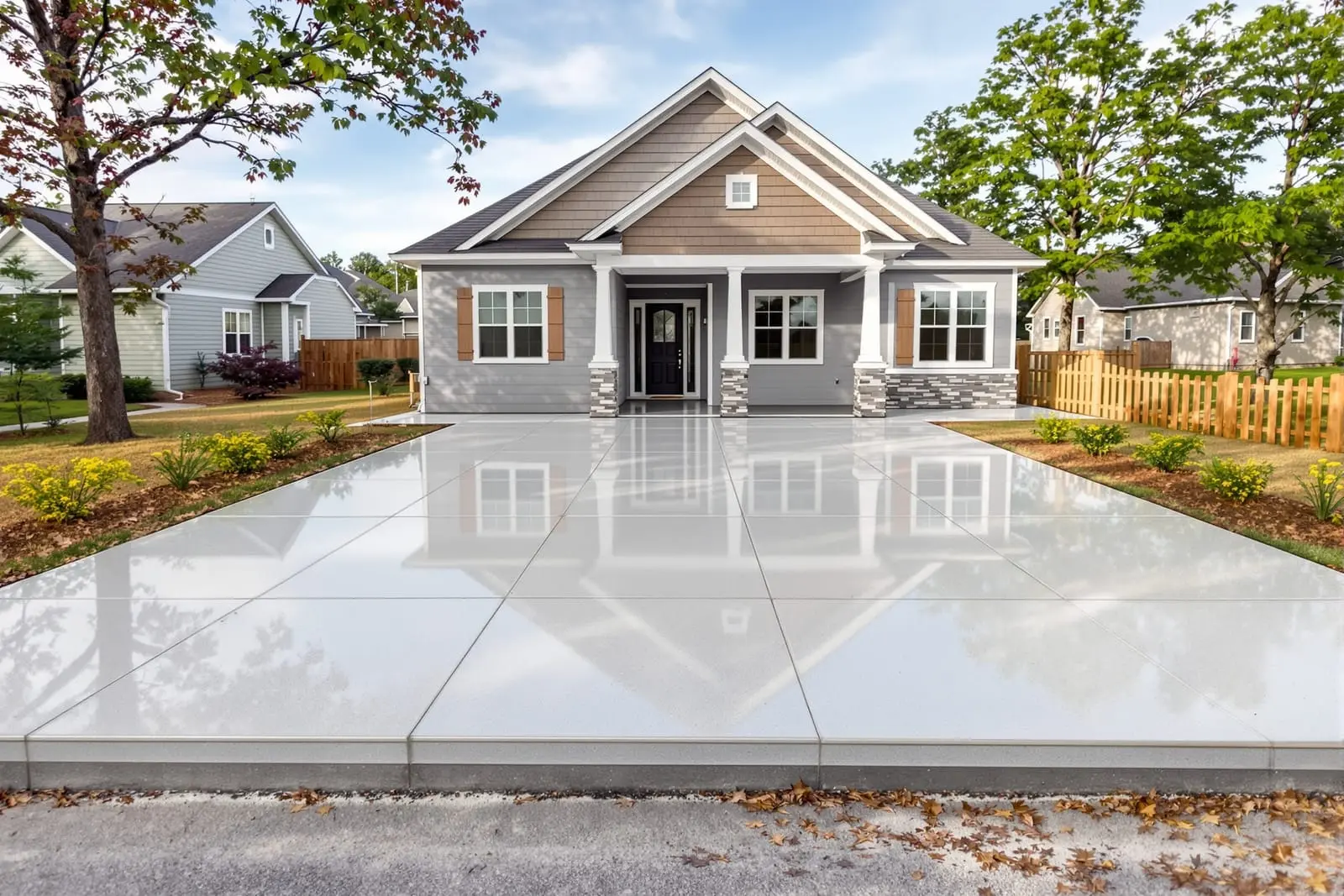
Build on a solid base with professional concrete slab foundation work in Baton Rouge, LA. We pour slabs for new homes, room additions, garages, and sheds. Our crew carefully prepares the subgrade, forms, and reinforcement for long term stability. Protect your structure with a level, properly cured concrete foundation.
Vanguard Concrete Baton Rouge provides professional concrete slab foundation throughout Baton Rouge, LA and the surrounding area. Our licensed, insured crew delivers safe, clean, on-time work with a free estimate before anything begins. Call (225) 416-8588 or request your free quote.
Concrete slab foundations built for Baton Rouge conditions
A concrete slab foundation in Baton Rouge has to deal with two things every day: clay soils that swell and shrink, and frequent heavy rain that can leave water sitting against your home. At Vanguard Concrete Baton Rouge, we design and pour slabs with those specific issues in mind so you do not end up with cracks, doors sticking, or standing water under your house.
When we look at a slab project, we start with where the building will sit on your lot, how water moves across your yard, and what type of structure will go on top. A small backyard shop on Airline Highway needs a different slab thickness and reinforcement pattern than a new home off Highland Road. We match the slab design to the real load it will carry, not a one size fits all guess.
We also pay close attention to building code in East Baton Rouge Parish. Local rules cover slab thickness, footing depth, and how the concrete must be reinforced. More important than just passing inspection, these details are what keep your floor from settling in one corner or letting moisture seep up through the surface in our humid climate. That is why every concrete slab foundation we pour starts with a clear plan, not just a truck of concrete and a guess with the forms.
Our process for strong, level concrete slabs & foundations
For every concrete slab foundation, we start with layout and excavation. We stake out the footprint of the slab with string lines and check elevations with a laser so your finished floor comes out level and at the right height relative to your yard and any existing structures. Then we strip sod, loose soil, and organic material until we reach stable ground. In many Baton Rouge neighborhoods, that means taking extra care with soft topsoil and pockets of clay that hold water.
Next, we build the formwork. We set solid wood or metal forms around the perimeter, braced so they will not move when the concrete goes in. At this stage we also shape any thickened edges, interior beams, or drop downs for porches and garages. We install sleeves for plumbing lines and conduit so you are not cutting into the slab later.
After forms come the base and compaction. We place and compact a layer of select fill or crushed stone, depending on the soil conditions and drainage needs. This step is critical in Baton Rouge, where poor compaction can turn into settlement when the soil gets saturated during a storm. We compact in lifts and check for soft spots, fixing problems now instead of after the slab cracks.
Reinforcement is next. We install rebar in footings and beams, and either rebar grid or welded wire mesh in the slab area, following a layout that matches your building loads. For many residential slabs we also use post tension cables if the design calls for it, which are stressed after the concrete cures to tighten and stiffen the slab. Finally, we pour, screed, float, and finish the concrete, then control the curing with water or curing compounds so it does not dry too fast in our heat and humidity.
Options for homes, shops, and commercial slab foundations
Not every concrete slab foundation is the same. Vanguard Concrete Baton Rouge designs slabs around how you will actually use the space. For homes, we often pour monolithic slabs with thickened edges that combine the footing and slab in one piece. These work well on relatively flat lots with good drainage and are common in new subdivisions around Baton Rouge. We can also do raised slabs over stem walls where flood concerns or sloping terrain make a standard slab a bad fit.
For shops, RV pads, and small commercial buildings, we may recommend a thicker slab, additional rebar, and deeper grade beams under heavy load areas. For example, a mechanic shop that will use two post lifts needs concentrated reinforcement and thickened pads where the columns land. A warehouse or storage building might call for a 6 inch or thicker slab with a tighter joint pattern to handle forklift traffic.
We also help you choose the right concrete mix. In our climate, a typical structural slab uses a 3000 to 4000 psi mix with air entrainment and the right water reducer, not extra water from a hose on site. For garages and workshops where hot tires and occasional chemical spills are expected, we can use mixes and finishes that resist surface damage and help control staining. We can add vapor barriers under the slab where moisture migration could be a problem, especially in finished living spaces.
Finishes can be tailored too. A house slab that will be covered with flooring gets a flat, troweled finish with attention to flatness so your tile or vinyl goes down smooth. A driveway or exterior slab usually gets a broom finish for traction when it rains. Interior commercial slabs might get a hard trowel finish or be prepped for later polishing or epoxy coatings.
What affects the cost of a concrete slab foundation in Baton Rouge
Homeowners often ask why slab quotes can differ so much. The biggest drivers are site conditions, slab design, and access. If your lot off Nicholson has soft or uneven ground that needs extra fill, grading, or drainage measures, the prep work will cost more than a flat, well drained site. Areas with existing roots, debris, or an old slab to remove also add labor and disposal costs.
The thickness of the slab, the number and depth of beams, and the amount of rebar all affect material and labor costs. A simple patio extension might be 4 inches thick with light reinforcement. A house slab foundation may have multiple interior beams and more steel. A heavy duty shop or commercial slab might be 6 inches or more with closely spaced reinforcement. Cutting corners on steel or beam depth is one of the quickest ways to create long term problems, which is why we line item these elements in our estimates so you can see exactly what you are paying for.
Access to the pour area is another factor. If a concrete truck can back right up to the forms, costs stay down. If we need to use a pump truck to reach a backyard behind a narrow side yard in Mid City, there is a pump fee. Weather and timing can play a part too. Working around frequent summer storms or very tight construction schedules sometimes means extra trips, additional manpower, or working in cooler hours to get a proper finish.
At Vanguard Concrete Baton Rouge we walk the site with you, talk through how the building will be used, and explain the design choices that affect both the upfront price and the long term performance of your concrete slab foundation. That way you can compare quotes by what is included, not just by the bottom line.
Common slab issues here and how we prevent them
In Baton Rouge, the most common slab problems we see are cracks from soil movement, moisture issues, and uneven settling. Some small surface cracks are normal in any concrete, but long diagonal cracks, corners dropping, or doors and windows going out of square are signs of a foundation issue. Many of these problems trace back to poor site prep, lack of drainage, or skipping reinforcement.
We reduce these risks by making sure water does not collect under or beside the slab. That may mean adding basic grading, French drains, or swales to move water away from the foundation. On tight city lots, we are careful about how roof runoff and neighbor yards drain so we are not building a slab that sits in a puddle after every storm. Under the slab, we use compacted base material and avoid trapping topsoil that will decay and settle.
To control cracking, we install proper control joints in the slab at planned locations so any movement happens where it is least visible and least harmful. We tie rebar correctly, maintain the specified spacing, and place it at the right height using chairs instead of letting it sink into the dirt. We also pay attention to curing. Concrete that dries too fast in the Louisiana heat tends to shrink and crack more, so we keep it moist early on and protect it from direct sun and wind as needed.
If we are tying into an existing slab, like extending a patio or adding a room, we drill and pin the new work to the old concrete with rebar dowels when appropriate. This keeps the two slabs moving together instead of separating or stepping. We also evaluate any existing foundation issues before adding onto a structure, so you do not build new work on top of a problem. Our goal at Vanguard Concrete Baton Rouge is to pour concrete slab foundations that handle our local soil and weather so you are not dealing with repair crews a few years down the road.
“
Professional concrete slabs & foundations, done right the first time, quality materials, honest pricing, and results that last.
Vanguard Concrete Baton Rouge
Concrete Slabs & Foundations Across Our Service Area